
Tango Storytime: The Colonization of the Body (Part I)
There is something deeply "off" in today’s tango world.
SOMETHING IS WRONG.
Marcelo Gutierrez
5/19/20262 min read
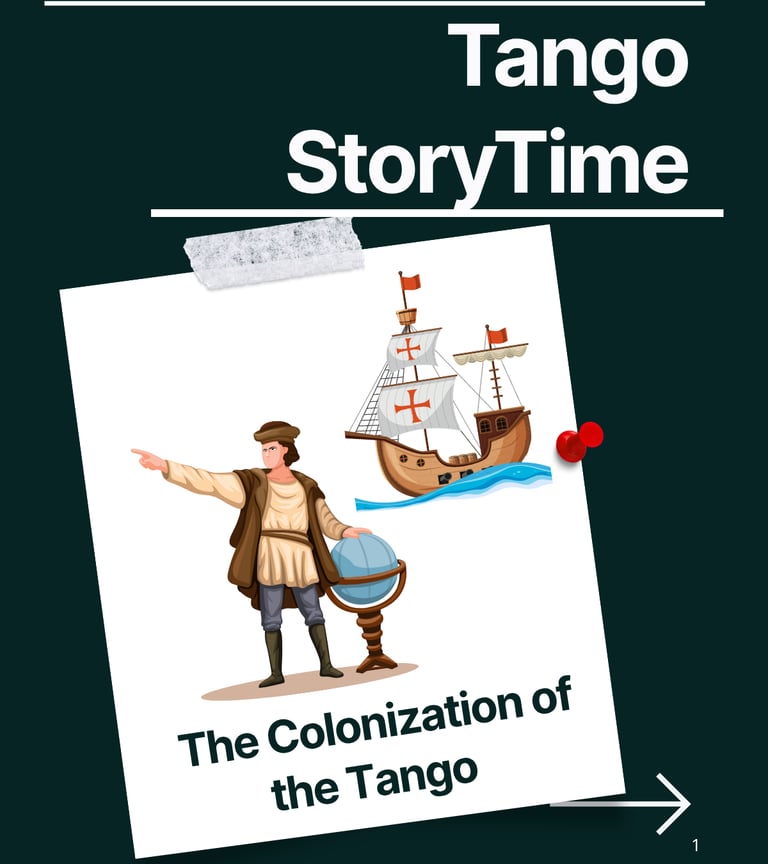
Tango Storytime: The Colonization of the Body (Part I)
There is something deeply "off" in today’s tango world.
How do people understand themselves inside this art form? Bringing the Tango art form into a deeper intellectual discussion is a necessity. I am fortunate to collaborate with brilliant minds who shed light on concepts we often feel but rarely manage to define.
One of the most damaging elements to invade our world is the concept of "LEVELS."
Let’s be precise: Tango was never organized that way. What we call “levels” today is not a neutral tool; it is a cultural import.
In my decades of walking the floors of Buenos Aires, I never once heard the great Maestros—Carlos Pérez, Rodolfo Dinzel, Nito & Coca, or Osvaldo & Coca—speak of "Level 1" or "Advanced Level." Even today, when I speak with my Argentine colleagues, we struggle to understand what that word is even supposed to mean in the context of an art form.
It is a system that places value outside the body—a system that teaches dancers to look for validation instead of experience. This is what I call the colonization of the tango body.
It has imported a commercial, approval-seeking, ladder-climbing mentality into a dance that was born from equality and community. By labeling people as "Beginner" or "Advanced," we have created a false and damaging culture. You hear it everywhere:
"I am so lucky that this 'advanced' person is dancing with me!"
"High-Level Events Only" (The exclusion of the community).
"You cannot dance there; it is full of 'advanced' dancers."
This produces anxiety, comparison, and exclusion.
"But Marcelo, in Buenos Aires, I hear things like this too!" you might say.
True. In Buenos Aires, when those labels appear, they are often part of a social game: status, familiarity, recognition. A "Celebrity Fanboy" mentality. It is not a structured system that defines your worth as a dancer.
Outside Buenos Aires, however, something different has taken hold. Recently, a European dancer told me:
"It’s about access… about knowing where you stand… about having an authority tell you your level." That sentence says everything. The moment you need an authority to tell you where you stand, the colonization is complete.
Another student, currently in Buenos Aires, put it differently:
"Back home, it is about social status and power dynamics. It's not about the dance; it's not about the art form. I can see that now. Most of the 'good' dancers abroad don't compare to what I find here. To tell you the truth, you can feel the power dynamics even here, especially in the tourist milongas where the so-called 'pros' go. But I’ve been going to the neighborhood milongas and places outside the city, and I'm having a blast. I am 'updating my software,' as you say in your lessons, far away from the power-dynamic BS that exists abroad."
In my observation, this pressure falls disproportionately on women—on how they should move, how they should look, and where they are “allowed” to belong.
But that is a deeper conversation.
To be continued in Part II.
Ready to update your software?
Learn how Argentine Tango is actually supposed to feel. Work with me:
TANGO PRIVATE LESSONS IN BUENOS AIRES
NEXT STORY...
Argentine Tango, Buenos Aires
Tango
+54-11-2741-9891
© 2026. All rights reserved.