
Tango Story Time
Tango Chaos and Power Dynamics — Interregnum (Part I)
SOMETHING IS WRONG.
Marcelo Gutierrez
12/22/20252 min read

Tango Story Time
Tango Chaos and Power Dynamics — Interregnum (Part I)
We’re living in a strange moment in tango history.
"The crisis consists precisely in the fact that the old is dying and the new cannot be born; in this interregnum a great variety of morbid symptoms appear."
—Antonio Gramsci
Gramsci wasn’t talking about tango, but he could have been.
“The old is dying”:
The old maestros are aging or gone.
The era when Buenos Aires was the unquestioned center of tango learning has lost its legitimacy. Its cultural authority, its hegemony, no longer rules by consent.
“The new cannot be born”:
Tango is now a global community without a shared compass.
Confusion multiplies across cities that claim to be “the new Buenos Aires.”
Aesthetics and styles are appropriated without cultural grounding.
“Buenos Aires says…” has become a marketing tactic more than a truth.
Those styles lack philosophical grounding. That absence creates emptiness and insecurity that inevitably passes on to their dancers and students.
“In this interregnum…”
The void becomes fertile ground for morbid symptoms, in tango terms, for self-anointed gurus.
These figures proclaim themselves experts in how tango should be danced, taught, and lived.
You see it everywhere:
Endless social-media guides on how to be a DJ, how to do a back sacada, an enrosque, or whatever will generate a 10-second reel.
And now, more than ever, we hear:
“An easier way to approach XXX in tango…”
“In my book, I explain how to make your tango life easier…”
“You should not dance with bad dancers.”
“Learn real tango in my academy.”
“Don’t go to other teachers.”
“Tango is all about connection...”
“This event is by invitation only, for good dancers.”
“In Buenos Aires, the real tango is…” (said by people who have never set foot in Buenos Aires).
All this creates a vacuum, a loss of identity, a loss of artistic reference points, a lack of genuine mentorship, and very poor fundamentals.
The consequences are visible:
The quiet loneliness people feel at events.
The insecurity in the embrace.
The flattening of expression.
A global vocabulary that becomes more standardized by the day.
Standardization is not surprising.
It’s easy to learn, easy to copy, and perfect for a short reel.
Recently, I danced with a “professional” who visited Buenos Aires. I was shocked by her lack of balance in simple movements, and she comes from a city that markets itself as equal or better than BA in tango quality. I wasn’t the only one who felt it; a colleague had a similar experience with the same dancer.
Important to clarify: all of us must continually work on our balance. But in her case, the instability came from a lack of foundational technique, a weak core in her fundamentals.
And YES
This is happening in Buenos Aires, too.
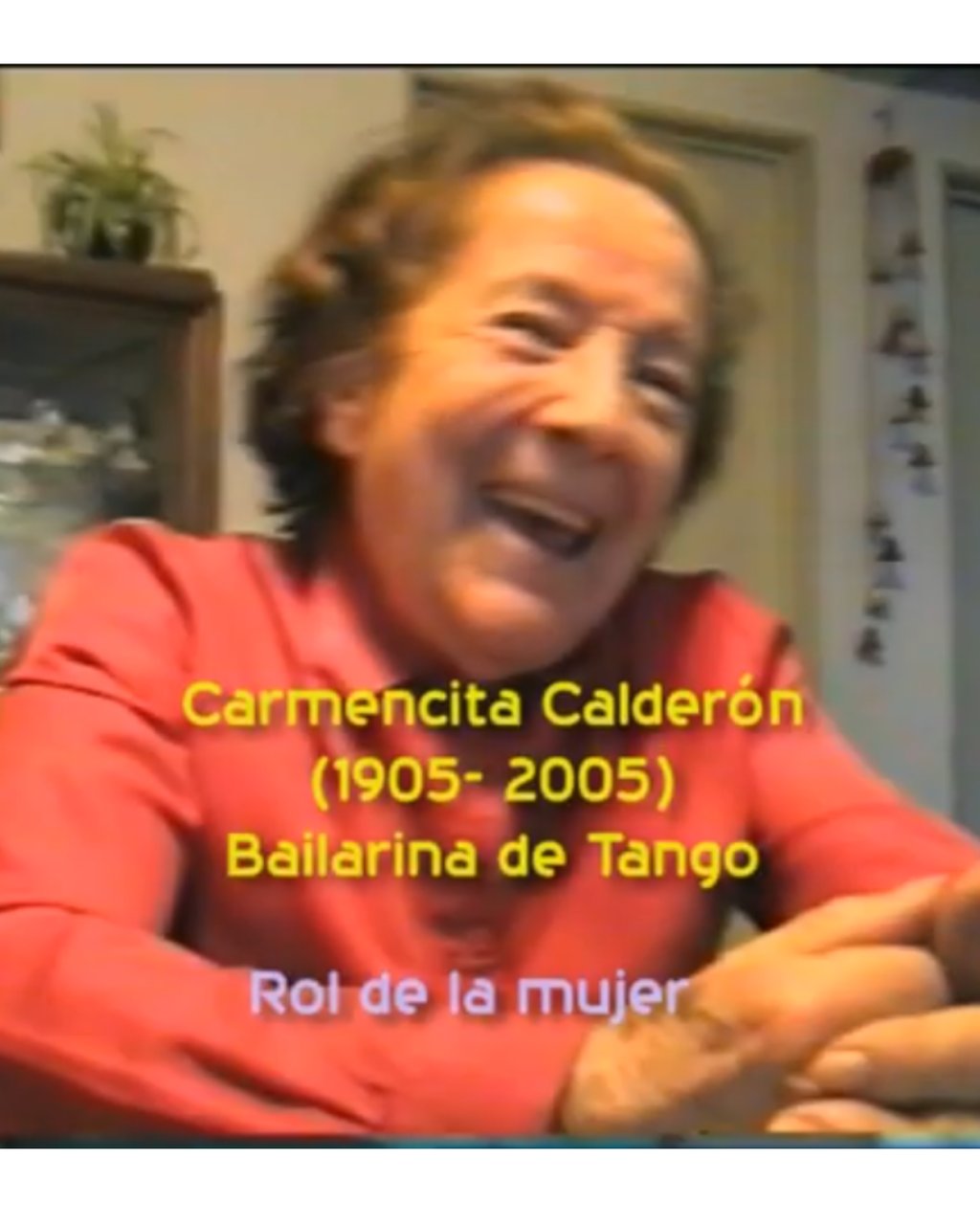
I wonder if these new tango gurus have even heard of Carmencita Calderón.
To be continued — Part II
If you are curious to know more about what Argentine Tango is, click here
Argentine Tango, Buenos Aires
Tango
+54-11-2741-9891
© 2026. All rights reserved.